



Forza Horizon 6 Engine Tuning Guide
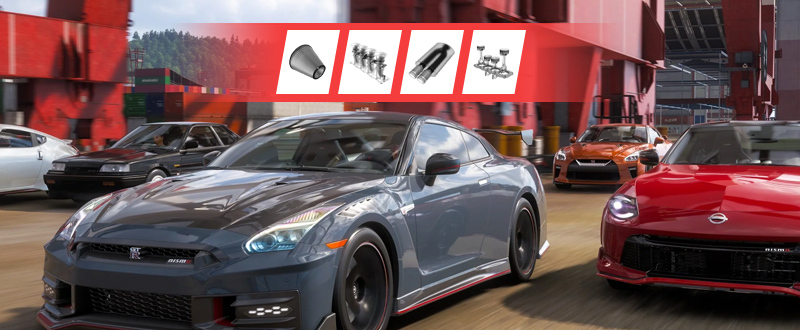
Forza Horizon 6 tuning is as deep as it is rewarding, and the engine category is where you build the heart of your car. Every engine upgrade adds power, changes the powerband, affects weight, and costs PI. The trick is choosing the right combination of upgrades to maximize power-to-weight (PWR) without blowing your class budget on parts that deliver diminishing returns.
This guide covers every engine upgrade decision you'll face in FH6: intake, intake manifold, fuel system, ignition, exhaust, pistons, valves, displacement, camshaft, oil and cooling, and flywheel. Engine swaps and aspiration choices are covered in detail in our Conversion Tuning Guide; this guide focuses on tuning the engine you've chosen.
Unlike Platform & Handling, the engine category has no tuning sliders in the Tune menu. Every engine decision is made at the upgrade stage - you install a part and the car's performance changes immediately. There's no dialing in after the fact. This makes the install order and PI efficiency of each upgrade the most important considerations.
Every engine upgrade increases power output but also affects PI, weight, and reliability characteristics. The PI cost of any single engine part varies depending on:
The general rule: not every engine upgrade is worth its PI on every build. Cheap power-per-PI upgrades like Race Exhaust often pay for themselves easily; expensive high-power upgrades like Race Displacement may push you out of your target class for marginal gain. Always watch the PWR value (shown on the Buy and Install screen) before committing.
The Intake upgrade replaces the factory air intake system with components that flow more air. More air in = more power out.
Intake tiers in FH6:
Intake is one of the most PI-efficient engine upgrades. Even on tight B-class builds, Sport Intake is often worth installing. Race Intake pays off at A class and above.
The Intake Manifold (sometimes called Throttle Body in FH6's upgrade menu) controls how air is distributed from the intake to the engine's cylinders. Upgrading improves throttle response and high-RPM breathing.
Intake Manifold tiers in FH6:
Intake Manifold pairs with Intake - you typically install them together. Installing a Race Intake without upgrading the manifold leaves performance on the table; the air can't be distributed efficiently to the cylinders.
The Fuel System upgrade replaces the factory fuel pump, injectors, and lines with race-spec components that deliver more fuel volume to support higher power outputs.
Fuel System tiers in FH6:
Important FH6 note: Fuel System availability varies by engine. Some engine swaps (notably the 6.2L V8 swap) skip the Street tier entirely and offer only Stock or Race. Always check the upgrade menu after committing to your engine swap to see what's available.
Fuel System is functionally required for high-power builds. The race intake, race displacement, and aspiration upgrades all demand more fuel than the stock fuel system can deliver. Skipping Race Fuel System on a heavily upgraded engine leads to a flat power band that doesn't deliver what the other upgrades promise.
Ignition controls the spark timing and energy delivered to combustion. Better ignition = cleaner burn = slightly more power and higher rev capability.
Ignition tiers in FH6:
Ignition is one of the cheapest engine upgrades in terms of PI cost. The power gain per PI is small but consistent - it makes a noticeable difference across the entire rev range. Race Ignition is almost always worth installing once you're past B class, simply because the PI penalty is so low.
The Exhaust upgrade replaces the factory exhaust manifold and pipes with high-flow components. Better exhaust flow reduces back-pressure, freeing the engine to rev higher and produce more power.
Exhaust tiers in FH6:
Race Exhaust is the single most PI-efficient engine upgrade in FH6. On nearly every car, Race Exhaust delivers significant power for very low PI cost. Install it first on any performance build. It's also one of the only upgrades that affects the car's audio character noticeably - a tuned exhaust changes the engine sound.
The Pistons & Compression upgrade replaces the factory pistons with lighter, stronger race components. Higher compression = more power per combustion stroke, but the upgrade also raises the engine's redline and shifts power to higher RPMs.
Pistons tiers in FH6:
Pistons are high-power, high-PI - they shift the engine's character toward higher RPM operation. This is great if you can pair them with other RPM-tuned upgrades (Race Camshaft, Race Valves) but can cost lap time if you're not staying in the higher rev range. For cross country and dirt builds where you spend more time in low-mid RPM, consider Sport Pistons instead of Race.
The Valves upgrade improves the engine's breathing at high RPM by replacing the factory valves and valve springs with race components that can handle faster cycle rates.
Valves tiers in FH6:
Valves work hand-in-hand with Camshaft - they both contribute to high-RPM power. Installing one without the other gives diminished returns. For builds focused on top-end power (road race at S1 and above), install both as a pair. For low-end torque-focused builds (cross country, drag launches), Sport Valves with Stock Camshaft may be the better PI play.
Displacement increases the engine's cubic capacity through cylinder bore and stroke changes. More displacement = more torque across the rev range = more power.
Displacement tiers in FH6:
Displacement is the single biggest power upgrade in FH6 and also the most PI-expensive. A Race Displacement upgrade on a tuned engine can add 50-100+ HP, but it also typically eats 30-60 PI. The decision tree:
The Camshaft controls when and how long the engine's valves open. Race camshafts shift the power band higher in the rev range - more peak power but less low-end torque.
Camshaft tiers in FH6:
Camshaft is a discipline-dependent decision:
The Oil & Cooling upgrade improves the engine's ability to maintain consistent operating temperature under sustained loads. This unlocks higher revs and prevents power drop-off during long stints.
Oil & Cooling tiers in FH6:
Oil & Cooling is a "reliability" upgrade more than a "power" upgrade. It doesn't add peak horsepower directly, but it lets you maintain peak horsepower across longer races. For sprint events and short circuits, the PI cost may not be justified. For Endurance events, long road race circuits, or any race longer than 5 laps, Race Oil & Cooling pays for itself by preventing power fade.
The Flywheel upgrade replaces the factory flywheel with a lighter racing component. A lighter flywheel allows the engine to rev faster (less rotational inertia to overcome) and improves throttle response.
Flywheel tiers in FH6:
Flywheel has an unusual PI behavior: on some cars, the lighter Flywheel reduces weight enough that it actually reduces total PI - giving you a free performance upgrade. This isn't universal, but it's worth checking every tier when fine-tuning a build. A Street Flywheel sometimes saves you the 1-2 PI you need to fit another upgrade.
When building a car for a specific class, install engine upgrades in this priority order. Stop when you've hit your PI ceiling:
1. Race Exhaust - Best power-per-PI in the entire engine tree. Install first.
2. Race Intake - Second best PI efficiency.
3. Race Intake Manifold - Pairs with Race Intake to deliver its full benefit.
4. Race Ignition - Cheap PI, modest power across the rev range.
5. Race Fuel System - Required to support high-power upgrades. Install before Race Pistons or Race Displacement.
6. Sport or Race Flywheel - Throttle response and sometimes free PI.
7. Race Camshaft - Significant high-RPM power. Skip on torque-focused builds (CC, dirt).
8. Race Pistons & Compression - High-RPM power. Pairs with Camshaft.
9. Race Valves - Completes the high-RPM trio (Cam + Pistons + Valves).
10. Race Displacement - Biggest power gain, biggest PI cost. Install last; this is the upgrade most likely to push you over your class ceiling.
11. Race Oil & Cooling - Reliability for sustained-load events. Skip for sprints.
For B-class and lower builds: stop at step 3 or 4 in most cases. For A-class: target steps 1-7. For S1 and above: install everything that fits.
Different disciplines reward different engine characters:
Thank you for taking the time to read our guide and we hope it provided you with helpful information! If you have any feedback or questions, or if you would like to contribute to our guides yourself, feel free to reach out to us on Discord!
This guide covers every engine upgrade decision you'll face in FH6: intake, intake manifold, fuel system, ignition, exhaust, pistons, valves, displacement, camshaft, oil and cooling, and flywheel. Engine swaps and aspiration choices are covered in detail in our Conversion Tuning Guide; this guide focuses on tuning the engine you've chosen.
Unlike Platform & Handling, the engine category has no tuning sliders in the Tune menu. Every engine decision is made at the upgrade stage - you install a part and the car's performance changes immediately. There's no dialing in after the fact. This makes the install order and PI efficiency of each upgrade the most important considerations.
How Engine Upgrades Work in FH6
Every engine upgrade increases power output but also affects PI, weight, and reliability characteristics. The PI cost of any single engine part varies depending on:
- The base engine - A small turbo I4 receives less PI per Race Intake than a Racing V12.
- What other engine parts you've already installed - The PI cost scales as power increases. The first Race upgrade is cheap; the tenth costs more.
- The car's other upgrades - Engine PI is balanced against tire compound, suspension tier, and aero. Adding race tires can make engine upgrades feel more expensive on the PI bar.
The general rule: not every engine upgrade is worth its PI on every build. Cheap power-per-PI upgrades like Race Exhaust often pay for themselves easily; expensive high-power upgrades like Race Displacement may push you out of your target class for marginal gain. Always watch the PWR value (shown on the Buy and Install screen) before committing.
Intake
The Intake upgrade replaces the factory air intake system with components that flow more air. More air in = more power out.
Intake tiers in FH6:
- Stock Intake - Factory intake. Lowest PI, lowest power.
- Street Intake - Modest improvement. Small power gain at low PI cost. Good for B-class builds where the PI savings matter.
- Sport Intake - Better flow than Street. Useful sweet spot for many A-class builds.
- Race Intake - Maximum air flow. Standard for any high-class performance build. The PI cost is justified by the power gain on most engines.
Intake is one of the most PI-efficient engine upgrades. Even on tight B-class builds, Sport Intake is often worth installing. Race Intake pays off at A class and above.
Intake Manifold
The Intake Manifold (sometimes called Throttle Body in FH6's upgrade menu) controls how air is distributed from the intake to the engine's cylinders. Upgrading improves throttle response and high-RPM breathing.
Intake Manifold tiers in FH6:
- Stock Manifold - Factory part. No power gain.
- Sport Manifold - Improved flow. Modest power gain.
- Race Manifold - Maximum flow and response. Required to fully exploit the Race Intake's higher airflow.
Intake Manifold pairs with Intake - you typically install them together. Installing a Race Intake without upgrading the manifold leaves performance on the table; the air can't be distributed efficiently to the cylinders.
Fuel System
The Fuel System upgrade replaces the factory fuel pump, injectors, and lines with race-spec components that deliver more fuel volume to support higher power outputs.
Fuel System tiers in FH6:
- Stock Fuel System - Factory. Lowest PI and power.
- Street Fuel System - Available on some engines. Modest improvement.
- Race Fuel System - Maximum fuel delivery. Required to support race-tier intake, displacement, and aspiration upgrades on most engines.
Important FH6 note: Fuel System availability varies by engine. Some engine swaps (notably the 6.2L V8 swap) skip the Street tier entirely and offer only Stock or Race. Always check the upgrade menu after committing to your engine swap to see what's available.
Fuel System is functionally required for high-power builds. The race intake, race displacement, and aspiration upgrades all demand more fuel than the stock fuel system can deliver. Skipping Race Fuel System on a heavily upgraded engine leads to a flat power band that doesn't deliver what the other upgrades promise.
Ignition
Ignition controls the spark timing and energy delivered to combustion. Better ignition = cleaner burn = slightly more power and higher rev capability.
Ignition tiers in FH6:
- Stock Ignition - Factory.
- Street Ignition - Modest improvement.
- Race Ignition - Maximum spark performance.
Ignition is one of the cheapest engine upgrades in terms of PI cost. The power gain per PI is small but consistent - it makes a noticeable difference across the entire rev range. Race Ignition is almost always worth installing once you're past B class, simply because the PI penalty is so low.
Exhaust
The Exhaust upgrade replaces the factory exhaust manifold and pipes with high-flow components. Better exhaust flow reduces back-pressure, freeing the engine to rev higher and produce more power.
Exhaust tiers in FH6:
- Stock Exhaust - Factory exhaust.
- Street Exhaust - Modest flow improvement.
- Sport Exhaust - Better flow. Common sweet spot for B and A class builds.
- Race Exhaust - Maximum flow. The standard for high-class builds.
Race Exhaust is the single most PI-efficient engine upgrade in FH6. On nearly every car, Race Exhaust delivers significant power for very low PI cost. Install it first on any performance build. It's also one of the only upgrades that affects the car's audio character noticeably - a tuned exhaust changes the engine sound.
Pistons and Compression
The Pistons & Compression upgrade replaces the factory pistons with lighter, stronger race components. Higher compression = more power per combustion stroke, but the upgrade also raises the engine's redline and shifts power to higher RPMs.
Pistons tiers in FH6:
- Stock Pistons - Factory pistons. Lowest PI, lowest power.
- Street Pistons - Modest improvement.
- Sport Pistons - Better. Common on A-class builds.
- Race Pistons - Maximum compression and durability. Standard for S1, S2, and R class builds.
Pistons are high-power, high-PI - they shift the engine's character toward higher RPM operation. This is great if you can pair them with other RPM-tuned upgrades (Race Camshaft, Race Valves) but can cost lap time if you're not staying in the higher rev range. For cross country and dirt builds where you spend more time in low-mid RPM, consider Sport Pistons instead of Race.
Valves and Valvetrain
The Valves upgrade improves the engine's breathing at high RPM by replacing the factory valves and valve springs with race components that can handle faster cycle rates.
Valves tiers in FH6:
- Stock Valves - Factory.
- Sport Valves - Improved high-RPM breathing.
- Race Valves - Maximum high-RPM performance.
Valves work hand-in-hand with Camshaft - they both contribute to high-RPM power. Installing one without the other gives diminished returns. For builds focused on top-end power (road race at S1 and above), install both as a pair. For low-end torque-focused builds (cross country, drag launches), Sport Valves with Stock Camshaft may be the better PI play.
Displacement (Engine Block)
Displacement increases the engine's cubic capacity through cylinder bore and stroke changes. More displacement = more torque across the rev range = more power.
Displacement tiers in FH6:
- Stock Displacement - Factory engine size.
- Sport Displacement - Modest bore/stroke increase. Decent power gain.
- Race Displacement - Maximum bore/stroke. Largest power gain available in the engine tree.
Displacement is the single biggest power upgrade in FH6 and also the most PI-expensive. A Race Displacement upgrade on a tuned engine can add 50-100+ HP, but it also typically eats 30-60 PI. The decision tree:
- At S1, S2, R class - Almost always worth maxing. The peak power gains justify the PI.
- At A class - Usually worth Sport tier; Race tier is the question. Check PWR delta before committing.
- At B class - Often skipped. The PI cost typically exceeds the gain at this class.
- For cross country and drag - Race Displacement pays off because both disciplines reward raw torque.
- For drift and dirt rally - Sport Displacement is often the sweet spot; Race can over-power the chassis on loose surfaces.
Camshaft
The Camshaft controls when and how long the engine's valves open. Race camshafts shift the power band higher in the rev range - more peak power but less low-end torque.
Camshaft tiers in FH6:
- Stock Camshaft - Factory cam, designed for daily driving and broad torque.
- Sport Camshaft - Slightly more aggressive timing. Modest peak power gain.
- Race Camshaft - Aggressive race-spec timing. Significant peak power gain at high RPM but noticeable low-end power loss.
Camshaft is a discipline-dependent decision:
- Road race at high classes (S1, S2, R) - Race Camshaft pays off. You spend most of your time at high RPM where the cam delivers its gains.
- Cross country and dirt - Stock or Sport Camshaft is usually better. You spend more time in low-to-mid RPM ranges where Race cams cost you torque.
- Drift - Sport Camshaft is typical. Race cams' high-RPM character makes throttle modulation harder during slides.
- Drag - Race Camshaft for peak power down the quarter-mile.
Oil and Cooling
The Oil & Cooling upgrade improves the engine's ability to maintain consistent operating temperature under sustained loads. This unlocks higher revs and prevents power drop-off during long stints.
Oil & Cooling tiers in FH6:
- Stock Oil/Cooling - Factory cooling system. Adequate for daily driving and short sprints.
- Sport Oil/Cooling - Improved cooling for performance builds.
- Race Oil/Cooling - Maximum heat management. Required when you've added significant power through other upgrades.
Oil & Cooling is a "reliability" upgrade more than a "power" upgrade. It doesn't add peak horsepower directly, but it lets you maintain peak horsepower across longer races. For sprint events and short circuits, the PI cost may not be justified. For Endurance events, long road race circuits, or any race longer than 5 laps, Race Oil & Cooling pays for itself by preventing power fade.
Flywheel
The Flywheel upgrade replaces the factory flywheel with a lighter racing component. A lighter flywheel allows the engine to rev faster (less rotational inertia to overcome) and improves throttle response.
Flywheel tiers in FH6:
- Stock Flywheel - Factory mass.
- Street Flywheel - Slightly lighter.
- Sport Flywheel - Notably lighter, better throttle response.
- Race Flywheel - Maximum lightness.
Flywheel has an unusual PI behavior: on some cars, the lighter Flywheel reduces weight enough that it actually reduces total PI - giving you a free performance upgrade. This isn't universal, but it's worth checking every tier when fine-tuning a build. A Street Flywheel sometimes saves you the 1-2 PI you need to fit another upgrade.
Engine Upgrade Install Order
When building a car for a specific class, install engine upgrades in this priority order. Stop when you've hit your PI ceiling:
1. Race Exhaust - Best power-per-PI in the entire engine tree. Install first.
2. Race Intake - Second best PI efficiency.
3. Race Intake Manifold - Pairs with Race Intake to deliver its full benefit.
4. Race Ignition - Cheap PI, modest power across the rev range.
5. Race Fuel System - Required to support high-power upgrades. Install before Race Pistons or Race Displacement.
6. Sport or Race Flywheel - Throttle response and sometimes free PI.
7. Race Camshaft - Significant high-RPM power. Skip on torque-focused builds (CC, dirt).
8. Race Pistons & Compression - High-RPM power. Pairs with Camshaft.
9. Race Valves - Completes the high-RPM trio (Cam + Pistons + Valves).
10. Race Displacement - Biggest power gain, biggest PI cost. Install last; this is the upgrade most likely to push you over your class ceiling.
11. Race Oil & Cooling - Reliability for sustained-load events. Skip for sprints.
For B-class and lower builds: stop at step 3 or 4 in most cases. For A-class: target steps 1-7. For S1 and above: install everything that fits.
Discipline-Specific Engine Strategy
Different disciplines reward different engine characters:
- Road racing - circuits - Maximum top-end power. Race Cam, Race Pistons, Race Valves, Race Displacement. Engine should peak at high RPM where you spend most of your time.
- Road racing - sprints - Balanced power. Race Exhaust/Intake/Manifold/Fuel/Ignition. Skip the high-RPM trio (Cam/Pistons/Valves) if PI is tight - sprints favor torque-rich mid-range over peak HP.
- Dirt racing - Mid-range torque. Race Exhaust/Intake/Fuel/Ignition, Sport Camshaft (not Race), Sport Pistons. Loose surfaces don't reward peak HP because you can't put it down.
- Cross country - Maximum torque. Race Displacement matters here because torque at low RPM helps you climb out of corners and over jumps. Stock or Sport Camshaft. Race Pistons skipped if PI is tight.
- Drift - Mid-range response. Race Exhaust, Sport Camshaft, Sport Pistons. You want predictable throttle behavior more than peak power.
- Drag - Peak power at the top end. Race everything: Cam, Pistons, Valves, Displacement, Fuel System. Drag races are won in the top half of the rev range.
PI Optimization Tricks for the Engine Category
- The Flywheel trick - On many cars, swapping to Sport or Race Flywheel actually reduces PI because the weight savings outweigh the upgrade's PI cost. Check every tier on the upgrade screen.
- The Ignition fill - Race Ignition is one of the cheapest engine upgrades in PI terms. If you're 1-3 PI under your class ceiling and want a small power bump, Race Ignition is often the best use of those points.
- The Displacement gate - Race Displacement is the most PI-heavy single engine upgrade. If you can hit your PWR target without it, skip it. If you need it, install everything else first and see if it still fits.
- Recheck transmission after engine upgrades - Transmission PI cost scales with engine power. A Sport Transmission that was cheap at stock power can become expensive after Race Displacement. Sometimes upgrading the transmission tier is cheaper after a major engine upgrade than before it.
- Race Oil & Cooling for endurance only - Sprint events don't need it. Long-format races and Endurance do.
Common Engine Tuning Mistakes
- Maxing every engine upgrade by default - Race tier on every component can eat 80-150 PI total. Most builds don't need all of it; pick the upgrades that match your discipline.
- Race Pistons without Race Fuel System - The pistons demand more fuel than stock fuel can deliver. Either install Race Fuel System or skip the Race Pistons; the mismatch leaves a flat power band.
- Race Camshaft on torque-focused builds - Cross country and dirt builds spend time in low-mid RPM where Race Cams cost you power. Stock or Sport is often better.
- Ignoring PWR when evaluating upgrades - The Buy and Install screen shows PWR before and after. If the PWR doesn't improve (or worse, drops), the upgrade isn't worth the PI on this build.
- Engine swap for the sake of swapping - Not every car benefits from an engine swap. Many factory engines have great FH6 character and PI efficiency. Always check PWR before and after the swap before committing.
- Race Displacement on light cars at low classes - On a 600 kg kei car at B class, Race Displacement adds power the chassis can't put down, while eating PI that would have been better spent on tires or aero.
- Skipping Race Exhaust - There's almost never a good reason to skip Race Exhaust. It's the most PI-efficient upgrade in the entire engine tree.
Glossary
- PWR (Power-to-Weight Ratio) - Horsepower (or kilowatts) divided by vehicle weight. The most important single number for evaluating any engine upgrade. Shown on the Buy and Install screen.
- Powerband - The range of engine RPM where peak power is produced. Race upgrades typically shift the powerband higher in the rev range.
- Displacement - The engine's total cylinder volume, measured in liters or cubic inches. Higher displacement = more torque across the rev range.
- Compression - The ratio of cylinder volume at piston bottom to volume at piston top. Higher compression = more power per stroke.
- Camshaft - The mechanical component that controls valve timing. Race camshafts have more aggressive timing profiles that favor high-RPM power.
- Fuel System - The pump, injectors, and lines that deliver fuel to the engine. Race tier is functionally required to support race-tier internal upgrades on most engines.
- Flywheel - The rotating mass attached to the engine's crankshaft. Lighter flywheels allow faster revs and improved throttle response.
- Aspiration - The method by which air is delivered to the engine (Naturally Aspirated, Centrifugal Supercharger, Positive-Displacement Supercharger, Twin Turbo, Single Turbo). Covered in detail in our Conversion Tuning Guide.
- Engine Swap - The complete replacement of one engine with another. The most consequential single conversion decision on most cars. Covered in detail in our Conversion Tuning Guide.
Thank you for taking the time to read our guide and we hope it provided you with helpful information! If you have any feedback or questions, or if you would like to contribute to our guides yourself, feel free to reach out to us on Discord!
(Last Updated: May 20th, 2026)