



Forza Horizon 6 Aero & Appearance Tuning Guide
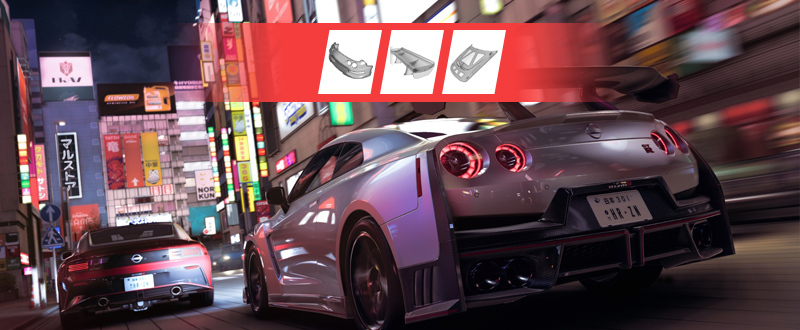
Forza Horizon 6 tuning is as deep as it is rewarding, and the aero and appearance choices you make are some of the most visible decisions on your car. They also have outsized effects on how the car drives - a poorly chosen rear wing can ruin a build's top speed, while skipping front aero entirely can leave a high-class build understeering through every corner.
This guide covers every aero and appearance decision you'll face in FH6: front bumpers, rear wings, side skirts, hoods, and how to tune the front and rear downforce sliders. We'll also cover the trade-offs between downforce, drag, and weight, and which combinations work best for each racing discipline.
The front bumper is one of the most consequential aero choices in FH6 because installing a race-tier front bumper unlocks the Front Downforce tuning slider in the Tune menu. Without it, your front downforce is fixed at the stock value and cannot be adjusted.
Front Bumper tiers in FH6:
When to install a race front bumper:
When to skip the race front bumper:
Like the front bumper, installing a race-tier rear wing unlocks the Rear Downforce tuning slider. Without a race rear wing, you cannot adjust rear downforce - it stays at whatever the stock body provides (often zero, depending on the car).
Rear Wing tiers in FH6:
When to install a race rear wing:
When to skip the race rear wing:
Side skirts in FH6 are primarily cosmetic. They have a minor effect on aero efficiency (smoothing airflow along the car's flanks) but do not unlock any tuning sliders or significantly change the car's behavior. Most race builds either keep them stock or use the matching race-tier skirts purely for the visual cohesion with the rest of the aero kit.
Considerations:
Hood upgrades in FH6 are primarily about weight reduction. Race hoods are usually made of carbon fiber and trim 5-15 kg off the front of the car. This has two beneficial effects: lower overall weight (improving acceleration, braking, and grip) and slight forward weight reduction (improving handling balance on front-heavy cars).
When to upgrade the hood:
The hood upgrade does not unlock any tuning sliders. It's pure weight reduction, similar to the Driveline or Weight Reduction upgrades.
Once you've installed a race front bumper, the Front Downforce slider appears in the Aero section of the Tune menu. Its range is car-specific (typically displayed in KGF or lb), but the principles are universal.
Common front downforce targets by drivetrain:
Once you've installed a race rear wing, the Rear Downforce slider appears. Like front downforce, the range is car-specific.
Common rear downforce targets by drivetrain:
The most important concept in aero tuning is aero balance - the ratio between front and rear downforce. It's shown on the Tune menu's Performance panel as a single value (e.g. "Aero Balance: 0.54").
Target aero balance per discipline:
Below Aero Balance on the Performance panel, you'll see Aero Efficiency - a value typically between 0.5 and 1.0. This represents how much downforce the car produces per unit of drag. Higher is better.
Aero Efficiency is mostly determined by the chassis (some cars are aerodynamic, some aren't) and your aero parts choices. Race rear wings hurt efficiency more than race front splitters because wings generate downforce by deflecting air upward, creating a lot of drag. Front splitters generate downforce by managing airflow under the car, which is more efficient.
Different disciplines reward different aero approaches. Here's the quick reference:
Thank you for taking the time to read our guide and we hope it provided you with helpful information! If you have any feedback or questions, or if you would like to contribute to our guides yourself, feel free to reach out to us on Discord!
This guide covers every aero and appearance decision you'll face in FH6: front bumpers, rear wings, side skirts, hoods, and how to tune the front and rear downforce sliders. We'll also cover the trade-offs between downforce, drag, and weight, and which combinations work best for each racing discipline.
Front Bumpers
The front bumper is one of the most consequential aero choices in FH6 because installing a race-tier front bumper unlocks the Front Downforce tuning slider in the Tune menu. Without it, your front downforce is fixed at the stock value and cannot be adjusted.
Front Bumper tiers in FH6:
- Stock Front Bumper - Factory appearance, no tuning slider unlock. Lightest option with the lowest drag, but you cannot tune front downforce. Best for low-class builds (B600 and below) where the speeds aren't high enough for downforce to matter.
- Race Front Bumper - Adds an aero splitter/lip, unlocks the Front Downforce slider, and increases the car's potential front downforce range. Adds drag, which slightly reduces top speed. Usually adds a small amount of weight.
- Rally / Off-Road Front Bumper - Available on some chassis as an alternative to the Race front bumper. Designed to handle the impacts of dirt and cross country events without breaking the aero balance. Unlocks the same Front Downforce slider but at potentially different min/max values.
When to install a race front bumper:
- Building S1 / S2 / R class where downforce matters at high cornering speeds
- Any AWD road race build (AWD's inherent understeer is fought with front downforce)
- Any car that needs more turn-in authority than its chassis naturally provides
- Any drift build at higher classes where you want the visual look
When to skip the race front bumper:
- B600 and below road race builds - the car isn't going fast enough for downforce to matter, and the PI is better spent elsewhere
- Pure drag builds - downforce only adds drag, slowing your trap speed
- Some cross country builds where the chassis already has enough mechanical grip
Rear Wings
Like the front bumper, installing a race-tier rear wing unlocks the Rear Downforce tuning slider. Without a race rear wing, you cannot adjust rear downforce - it stays at whatever the stock body provides (often zero, depending on the car).
Rear Wing tiers in FH6:
- Stock / No Wing - Lightest, lowest drag, no Rear Downforce slider. Best for low-class builds and pure top-speed builds.
- Race Rear Wing - Adds a fixed or adjustable wing, unlocks Rear Downforce tuning. Adds drag and a small amount of weight. Critical for high-class road racing and AWD builds where rear stability matters.
- Rally / Off-Road Rear Wing - Available on some chassis. Built for the punishment of loose surfaces; unlocks the same Rear Downforce slider with values tuned for dirt and cross country use.
When to install a race rear wing:
- S1 / S2 / R road race builds - rear downforce keeps the back end stable through high-speed corners
- RWD road race builds at A class and above - plants the rear under power
- Any build where you specifically want the visual look
When to skip the race rear wing:
- AWD builds - minimum rear downforce on AWD cars, so the PI cost of a Race Rear Wing is often wasted (you'd set the slider to minimum anyway). Many competitive AWD builds skip the rear wing entirely.
- Cross country and pure dirt builds - rear downforce is wasted off-road; the chassis is already over-tired for the speeds reached
- Drag builds - any rear wing adds drag that hurts trap speed
- B class and below - downforce contribution is minimal at these speeds
Side Skirts
Side skirts in FH6 are primarily cosmetic. They have a minor effect on aero efficiency (smoothing airflow along the car's flanks) but do not unlock any tuning sliders or significantly change the car's behavior. Most race builds either keep them stock or use the matching race-tier skirts purely for the visual cohesion with the rest of the aero kit.
Considerations:
- Race side skirts add a few kg of weight and may shift PI by a single point
- On cars where ground effect matters (low-slung sports cars and prototypes), race side skirts can contribute slightly to aero efficiency
Hood
Hood upgrades in FH6 are primarily about weight reduction. Race hoods are usually made of carbon fiber and trim 5-15 kg off the front of the car. This has two beneficial effects: lower overall weight (improving acceleration, braking, and grip) and slight forward weight reduction (improving handling balance on front-heavy cars).
When to upgrade the hood:
- On front-heavy builds where shifting weight off the nose helps balance
- Any time you're hunting for the last few PI points to stay under a class ceiling
- When the visual matters for content creation
The hood upgrade does not unlock any tuning sliders. It's pure weight reduction, similar to the Driveline or Weight Reduction upgrades.
Tuning Front Downforce
Once you've installed a race front bumper, the Front Downforce slider appears in the Aero section of the Tune menu. Its range is car-specific (typically displayed in KGF or lb), but the principles are universal.
- Higher Front Downforce - Plants the front wheels under cornering, improves turn-in, fights understeer. Costs aero efficiency (more drag) and reduces top speed slightly.
- Lower Front Downforce - Less front grip but more top speed and acceleration. Useful on speed-bias tracks and drag builds.
Common front downforce targets by drivetrain:
- AWD - Maximum front downforce. AWD has inherent understeer; max front DF is the strongest tool to fight it.
- RWD - Moderate to high front downforce, typically 60-80% of the slider range. Enough to plant the front, not so much that the rear feels light by comparison.
- FWD - High to maximum front downforce. FWD does all the work on the front axle (steering, power, braking), so planting it pays off.
Tuning Rear Downforce
Once you've installed a race rear wing, the Rear Downforce slider appears. Like front downforce, the range is car-specific.
- Higher Rear Downforce - Plants the rear under cornering and acceleration. Reduces oversteer character. Adds significant drag (rear wings produce more drag per unit downforce than front splitters).
- Lower Rear Downforce - Frees the rear to rotate. Less drag, more top speed.
Common rear downforce targets by drivetrain:
- AWD - Minimum rear downforce. AWD already has rear traction from the drivetrain itself; rear downforce just adds drag without proportional grip gain. Counterintuitive but proven in the meta - many top AWD builds set rear DF to slider minimum.
- RWD - Moderate to high rear downforce, typically 60-90% of the slider range. RWD needs rear stability under power; rear DF is the primary tool for it.
- FWD - Low to moderate rear downforce. The rear is just along for the ride; minimal DF is enough for high-speed stability.
Aero Balance
The most important concept in aero tuning is aero balance - the ratio between front and rear downforce. It's shown on the Tune menu's Performance panel as a single value (e.g. "Aero Balance: 0.54").
- Aero Balance = 0.50 - Neutral. Front and rear downforce are roughly equal in their effect.
- Aero Balance below 0.50 (e.g. 0.40) - Front-biased aero. The front sticks harder than the rear at speed, which fights understeer but can make the rear feel light at high speeds.
- Aero Balance above 0.50 (e.g. 0.60) - Rear-biased aero. The rear sticks harder than the front at speed, which adds stability under power and high-speed acceleration but can introduce understeer through corners.
Target aero balance per discipline:
- Road racing AWD - 0.40-0.45 (front-biased to fight understeer)
- Road racing RWD - 0.50-0.55 (neutral to slightly rear-biased)
- Road racing FWD - 0.45-0.55 (slightly front-biased)
- Drift - 0.45-0.50 (slightly front-biased; you want the rear to break loose)
- Drag - Minimum total downforce; balance doesn't matter much when both values are near zero
- Dirt / Cross Country - Aero is a minor factor; balance is typically near 0.50 with low overall values
Aero Efficiency
Below Aero Balance on the Performance panel, you'll see Aero Efficiency - a value typically between 0.5 and 1.0. This represents how much downforce the car produces per unit of drag. Higher is better.
- Aero Efficiency above 0.85 - Excellent. The car generates significant downforce without sacrificing too much top speed.
- Aero Efficiency 0.70-0.85 - Average. Normal range for most builds with race aero installed.
- Aero Efficiency below 0.70 - Poor. Either the chassis has bad aero characteristics or you've over-aero'd a slow build. Consider reducing downforce settings.
Aero Efficiency is mostly determined by the chassis (some cars are aerodynamic, some aren't) and your aero parts choices. Race rear wings hurt efficiency more than race front splitters because wings generate downforce by deflecting air upward, creating a lot of drag. Front splitters generate downforce by managing airflow under the car, which is more efficient.
Discipline-Specific Aero Strategy
Different disciplines reward different aero approaches. Here's the quick reference:
- Road racing - twisty circuits (Tokyo backstreets, mountain passes) - Max aero. Race front bumper and race rear wing both installed. Tune both downforce sliders toward their max. Drag is a minor factor at low-to-mid speeds; cornering grip dominates.
- Road racing - speed circuits (long straights, high-speed sweepers) - Min aero, or skip race wing entirely. Drag is the enemy on long straights. Some builds even skip the race front bumper to save PI for engine/drivetrain upgrades.
- Road racing - sprint events (mixed) - Moderate aero. Race front bumper installed with mid-range front DF; race rear wing optional depending on PI budget.
- Dirt racing - Minimal aero. Off-road speeds rarely exceed 150 km/h, where downforce barely contributes. Some builds install rally aero parts for the look without using high downforce values.
- Cross country - Minimal or no aero. Race front bumpers and rear wings are wasted PI on CC builds - they add weight and don't help over jumps or rough terrain. Off-road suspension and tires do all the work.
- Drift - Race front bumper for the look and slight front DF; race rear wing skipped entirely (drift wants the rear free to break loose).
- Drag - Minimum aero. Both front and rear DF sliders to zero (or whatever the floor is). Drag is the only thing that matters; downforce is the enemy.
Common Aero and Appearance Mistakes
- Installing race aero on low-class builds - At B class and below, top speeds rarely exceed 200 km/h, where downforce contribution is minimal. The PI cost of race front bumper + race rear wing is usually better spent on tires, brakes, or engine upgrades.
- Maxing rear downforce on AWD - Counterintuitive but a real mistake. FH6 meta calls for minimum rear DF on AWD because the drivetrain already provides rear traction. Adding rear downforce on AWD just slows the car down on straights without meaningful corner gain.
- Ignoring Aero Balance - It's tempting to just max both front and rear DF. But if the resulting Aero Balance doesn't match your drivetrain (e.g. 0.55 rear-bias on an AWD that wants 0.40 front-bias), the car will fight you through every corner.
- Installing widebody for looks on PI-limited builds - Track width upgrades cost real PI. If you're not actually using the wider tire fitment they enable, you've wasted PI on cosmetics.
- Forgetting that race aero adds weight - Race bumpers and wings together can add 15-30 kg. On light cars this offsets the gains from Race Weight Reduction. Check the PWR delta after each aero install.
- Tuning downforce before installing race parts - The Front Downforce and Rear Downforce sliders are locked until you install the race-tier front bumper and rear wing respectively. If your tune sheet calls for specific downforce values, confirm the parts are installed first.
Glossary
- Downforce - Aerodynamic force pushing the car onto the road, increasing tire grip. Measured in KGF (kilogram-force) or lb in the FH6 Aero tune menu.
- Drag - Aerodynamic resistance to forward motion. Increases with downforce. Reduces top speed.
- Aero Balance - The ratio of front downforce to total downforce. 0.50 = neutral. Lower than 0.50 = front-biased. Higher than 0.50 = rear-biased.
- Aero Efficiency - The ratio of downforce to drag the car produces. Higher = more grip per unit of speed lost. Visible in the Tune menu Performance panel.
- Race Front Bumper - The aero conversion that unlocks Front Downforce tuning. Required for any tunable front downforce setting.
- Race Rear Wing - The aero conversion that unlocks Rear Downforce tuning. Required for any tunable rear downforce setting.
- KGF - Kilogram-force. The metric unit FH6 uses for downforce values. 1 KGF ≈ 2.2 lb.
- Widebody / Track Width - Conversion upgrades that widen the car's track and allow wider tires. Covered in detail in the Conversion Tuning Guide.
Thank you for taking the time to read our guide and we hope it provided you with helpful information! If you have any feedback or questions, or if you would like to contribute to our guides yourself, feel free to reach out to us on Discord!
(Last Updated: May 20th, 2026)